



NexTex AI

Industrial machine intelligence

Machine Intelligence for Sustainable Textile Manufacturing

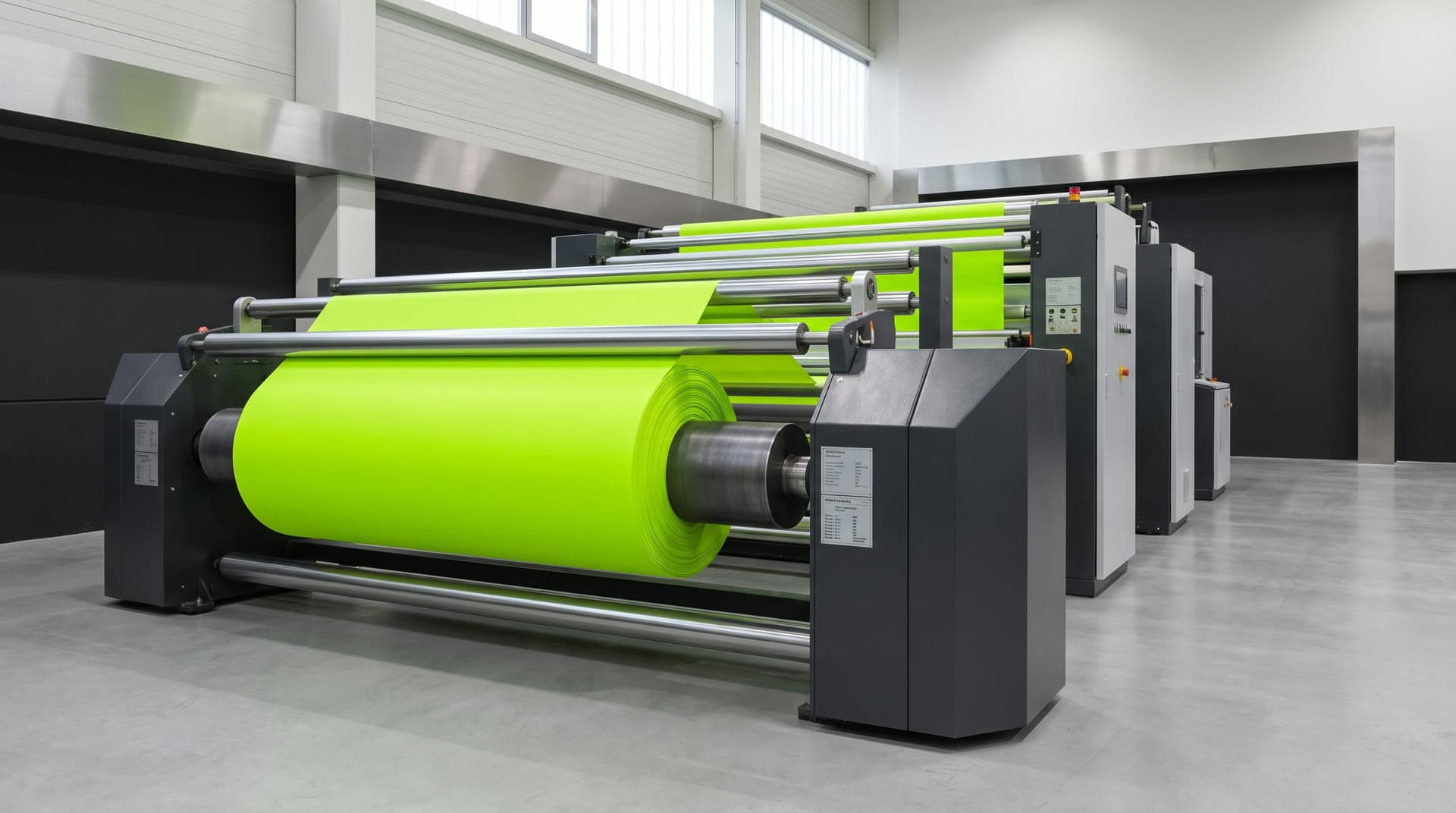
The machine wakes.

Vision comes online.

Every meter, understood.

Design targets — validated per mill during pilots

Pilot scope
Circular knit lines
First-quality target
98.5%
Energy view
kWh/kg per machine
Scan coverage target
100% of web
Scroll

The problem

Textile mills run on machines that see nothing and prove nothing.

01

Inspection misses what machines could see

Across peer-reviewed studies, manual fabric inspection catches only 60–75% of defects — and accuracy falls as the shift wears on.1 Every missed meter travels downstream as cost, waste and customer claims.

02

A failed batch burns everything twice

Typically 4–8% of dyed metreage is re-processed for off-shade results.2 With conventional dyeing consuming on the order of 100–180 litres of water per kilogram of fabric,3 every re-dye spends that water, energy and chemistry a second time.

03

The evidence burden is cascading down the chain

From around 2028, textiles sold in the EU are expected to carry a Digital Product Passport built from production data.4 Brands are already asking suppliers for batch-level evidence — long before regulators ask them.

Manufacturing does not need another dashboard. It needs machines that can see, explain and prove what they do.

Sources
  1. 1Rasheed et al., Mathematical Problems in Engineering (2020) — survey of fabric-defect detection; manual inspection accuracy 60–75%, value loss 45–65%. [Peer-reviewed study] source
  2. 2Coloration-industry literature on right-first-time dyeing — off-shade rework at 4–8% of metreage. [Industry-reported] source
  3. 3PLOS Sustainability & Transformation (2024) — measured average 164 L water and 449 g chemicals per kg dyed textile; conventional range ~100–180 L/kg. [Peer-reviewed, measured] source
  4. 4EU Ecodesign for Sustainable Products Regulation (2024/1781) — textile delegated act expected ~2027, Digital Product Passport compliance expected from ~2028. [Regulatory timeline (expected)] source

Industrial pilot partners

Letters of Intent signed for pilot collaboration.

Terrot GmbH logo

Terrot GmbH

Circular knitting machine manufacturer — Chemnitz, Germany

Nuryıldız Tekstil logo

Nuryıldız Tekstil

60+ machines, circular knitting & finishing — Çorlu, Türkiye

Ribana Tekstil logo

Ribana Tekstil

60+ circular knitting machines — Çorlu, Türkiye

ONE WARE GmbH logo

ONE WARE GmbH

Hardware-optimized AI deployment & FPGA edge inference — technology partner, Germany

Pilot preparation — not customers, not production deployments

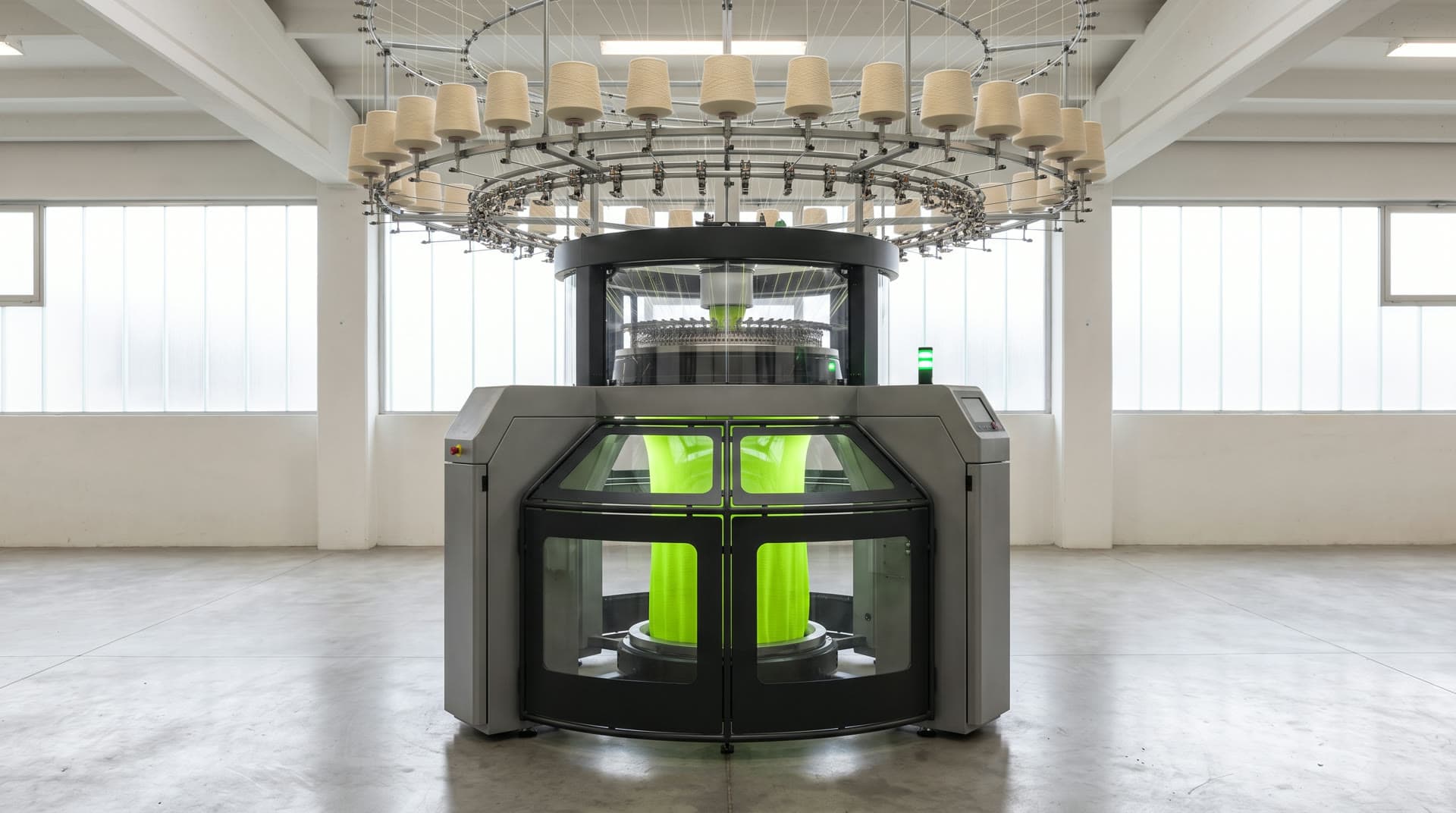
Knitting — generated scene of the knitting stage with machine-intelligence overlay

The production lifecycle

One intelligence layer across the whole line.

01 · Knitting

Designed to watch loop formation at needle resolution — catching defects as they are knitted, not at rolling.

  1. Knitting
  2. Dyeing
  3. Stentering
  4. Sanforizing
  5. Finishing
  6. Quality Control

How NexTex AI works

From photons to proof, in four moves.

01

Sense

Industrial cameras, retrofit sensors and PLC / SCADA taps capture every machine event — without stopping the line.

02

Understand

Edge AI models detect defects and contextualize machine behavior in real time, meters from where it happens.

03

Recommend

The platform proposes process improvements. Operators review, approve or decline — no autonomous machine control.

04

Prove

Every event lands in the sustainability intelligence database and becomes a traceable KPI — audit-ready by design.

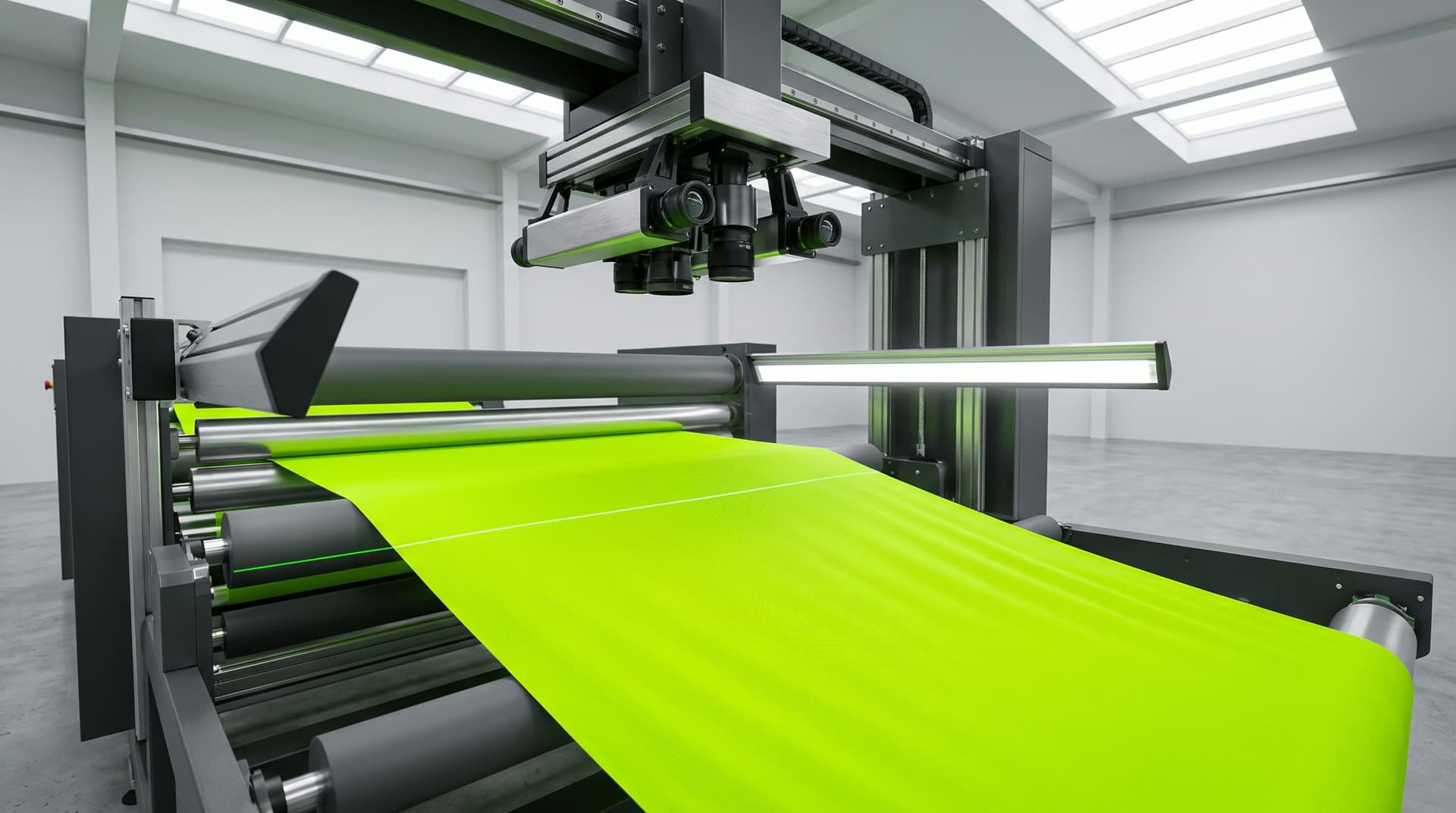
Machine-vision inspection station scanning toxic green fabric — generated for NexTex AI

AI defect intelligence

Built to grade every meter the moment it exists.

Operator alert · line 2

Recurring needle line, machine M-12, needle 214. Root cause flagged — inspection recommended before the next batch.

Detection and classification, not just anomaly flags.

Each finding carries a class, a confidence score, machine context and position on the web — so quality teams act on causes, not symptoms. Validated findings feed the continuous learning loop.

  • Needle defects
  • Needle lines
  • Broken yarn
  • Fabric holes
  • Oil stains
  • Lycra distortion
  • Shade variation
  • Color deviation ΔE
  • Surface anomalies
  • Texture anomalies
  • Contamination
  • Seam irregularities
  • Start / stop anomalies

AI process intelligence

The process learns where its optimum lives.

NexTex AI correlates machine behavior with quality and resource outcomes, then recommends the parameter window that produces first-quality fabric with less energy, water and chemistry.

  • Machine speed
  • Temperature
  • Pressure
  • Recipe parameters
  • Production stability
  • Energy consumption
  • Water consumption
  • Chemical usage
  • Waste reduction
  • Throughput
  • Machine efficiency

Human-in-the-loop by design

NexTex AI recommends. Operators decide. No process parameter changes without explicit, logged operator approval — ever.

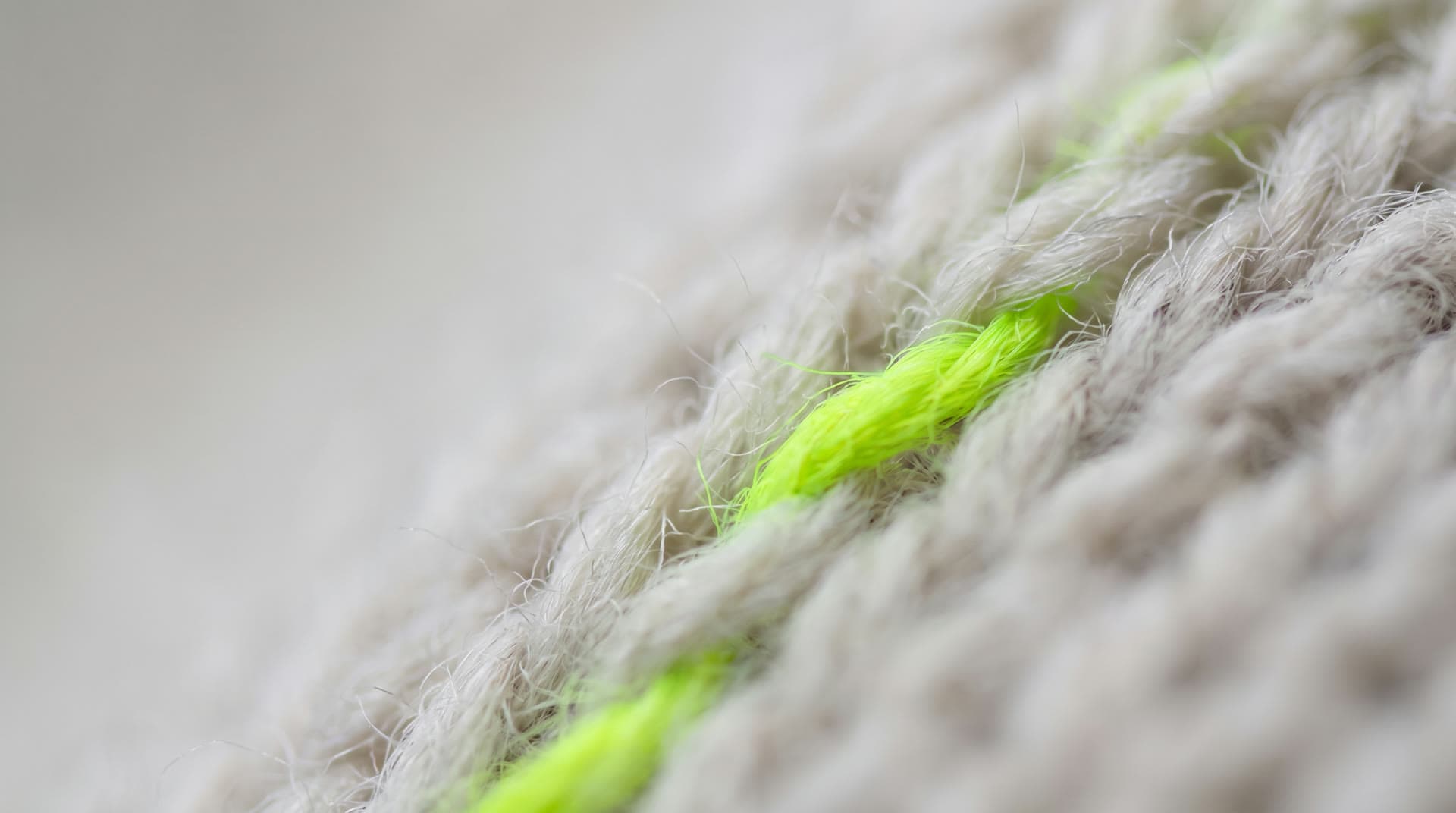
Macro view of knitted fabric with a single toxic green thread — generated for NexTex AI

Recommendation · illustrative example

Stenter M-07 — reduce drying zone 3 by 4 °C. Estimated −6% gas per batch; ΔE stability unchanged within tolerance.

Industrial data intelligence

A digital twin built from every signal on the floor.

Machines

  • Industrial cameras
  • Edge AI devices
  • Industrial sensors
  • PLC
  • SCADA
  • Machine controllers

Context

  • Operator inputs
  • Batch information
  • Production recipes
  • Material properties
  • Quality inspection systems

Environment

  • Energy meters
  • Water meters
  • Thermal sensors
  • Vibration sensors
  • Color measurement ΔE
  • Machine events

The sustainability intelligence database · in development with pilot partners

Designed so every machine event connects to its quality, process and sustainability outcome — one queryable record of how fabric actually gets made.

Sustainability intelligence & reporting

From machine data to audit-ready sustainability intelligence.

Five numbers tell the story. Everything beneath them stays traceable to machine events — each figure designed to drill down to the events that produced it.

Illustrative design targets — validated against each mill's own baselines during pilots

Energy

0.42

kWh/kg

−8% vs target

Water

62

L/kg

−12% YoY

CO₂e

1.9

kg/kg

scope 1+2

Waste

1.8

%

−0.6 pt since pilot

Quality

98.5

%

first quality

View detailed KPIs

Machine efficiency

84%

event-based OEE

Rework

0.9%

root-caused

ΔE color stability

0.4 avg

per-batch drift

Sustainability report

Illustrative

Machine-verified performance

Energy
−8%
Water
−12%
CO₂e
−9%

Designed so every figure traces to machine events · Export PDF

Reports your auditor can interrogate.

One page, five numbers, a trend — and behind every line, the machine events that produced it. Drill from report figure to timestamp when the question comes. NexTex AI prepares the evidence; certification remains with accredited bodies.

  • Customer & CSRD-aligned reporting
  • Digital Product Passport readiness (EU, expected from ~2028)
  • EU Green Deal metrics
  • Documentation structured for third-party assurance
  • ESG dashboards
  • Exportable PDF report packs

Products

One platform. Two products.

Product 01

Fabric

AI-powered machine monitoring for textile manufacturers starting digital transformation — see your quality and resource footprint in weeks, not years.

Pilot scope

  • Real-time defect detection
  • Industrial cameras + edge AI
  • Machine monitoring & alerts
  • Cloud dashboard
  • Quality KPIs per machine
  • Energy & water KPIs
  • CO₂ & fabric-waste KPIs

Retrofit install · pilot pricing on request

Product 02

Fabric Pro

The complete industrial intelligence platform — process optimization, digital twin and sustainability intelligence across factories.

Pilot scope

  • Everything in Fabric
  • Industrial sensors + PLC / SCADA integration
  • Multi-sensor data collection
  • Enterprise dashboards

Planned

  • Process-optimization AI — operator-approved
  • Predictive quality models
  • Digital twin
  • Machine-level sustainability intelligence
  • Customer & CSRD-aligned report packs
  • Digital Product Passport readiness
  • Multi-factory management & API

Sequenced with pilot partners

Fabric upgrades to Fabric Pro without replacing hardware — the same cameras, sensors and edge devices carry both.

Industrial AI architecture

Built like the machinery it watches.

Inference runs at the edge, meters from the fabric. The cloud holds the intelligence and the evidence. Every layer is replaceable without stopping production.

01

Machine layer

Industrial cameras

Retrofit sensors

PLC / SCADA

Machine events

02

Edge layer

Edge AI inference

Event capture

On-prem buffering

Line-speed latency

03

Intelligence layer

Defect models

Process models

Digital twin

Sustainability database

04

Application layer

Dashboards

Operator alerts

Audit-ready reports

API

Data sovereignty by default: fabric imagery can stay on premises — only events, KPIs and model updates cross the boundary.

Continuous learning loop

Every shift makes the models better.

01

Detect

Models flag defects and process drift in real time.

02

Validate

Operators confirm or correct every finding — human-in-the-loop.

03

Retrain

Validated findings become training signal for the next model.

04

Deploy

Improved models will roll to the edge with full version history.

05

Monitor

Detection quality and false-alarm rates are tracked like any KPI.

The loop is closed by people, not around them: operator validation is what turns detections into ground truth.

Pilot environments

Piloted in running mills, not in a lab.

A NexTex AI pilot is an engineering engagement with defined success criteria — measured against your fabric, your machines and your baseline, before any rollout decision.

Current status

Letters of Intent signed with three industrial partners. First pilot mills onboarding for 2026–27. No commercial deployments yet — and we say so.

  • Retrofit cameras and sensors install without stopping the line
  • One machine first, then the line, then the factory
  • Success criteria agreed upfront: detection rate, false alarms, KPI baseline
  • Typical pilot scope: 8–12 weeks in a running mill
  • Pilot environments: knitting, dyeing and finishing lines

Roadmap

Sequenced with pilot partners.

Now

Quality foundation

  • Defect detection in validation
  • First pilot mills onboarding (LoIs signed)
  • Core KPI baselines defined with partners

Next

Process intelligence

  • Operator-approved process recommendations
  • Multi-factory dashboards
  • CSRD-oriented report packs

Later

Industrial scale

  • Digital twin scenario planning
  • Digital Product Passport data exports
  • Cross-mill benchmarking

Founders

Founder-led, where textile engineering meets machine intelligence.

We publish claims we can defend — the same standard we apply to every report the platform produces.

Berk Gülaçtı

Founder & CEO — Finance, Business Development & Sales

berk@nextex-ai.com

Burak Ünal

Co-Founder — AI & Computer Vision

burak@nextex-ai.com

Zeynep Öykü Erdem

Co-Founder — Backend Infrastructure & Full-Stack Engineering

Phil Borkenhagen

Co-Founder — System, Edge & Data Architecture

We’re hiring a Founding Software Engineer. careers@nextex-ai.com

Contact

See your fabric through machine eyes.

Tell us about your lines — machines, fabrics, current inspection setup — and we will scope a pilot with measurable success criteria.

Processes

Opens in your email client — or write to us directly below.

General Inquiries
NexTex AI
info@nextex-ai.com
Founder & CEO
Berk Gülaçtı
berk@nextex-ai.com
Co-Founder & AI Vision Engineer
Burak Ünal
burak@nextex-ai.com